Reading Time: 5 minutes
Understanding Clash Detection in Modern Construction
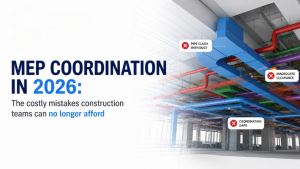
Clash detection sits at the center of most coordination meetings, but let’s be honest, the process always feels like detective work. You chase conflicts between systems, ask teams to confirm field conditions, and hope the model aligns with what’s actually happening onsite. You deal with surprises you didn’t ask for because someone installed ductwork two inches too low.
Here’s the thing… Construction doesn’t forgive errors. Additionally, clash detection allows you to see exactly what’s going to go wrong before you run conduit, hang pipe, or pour concrete. Early problem detection by your BIM coordination team can save you thousands of dollars, weeks of schedule aggravation, and a great deal of frustration.
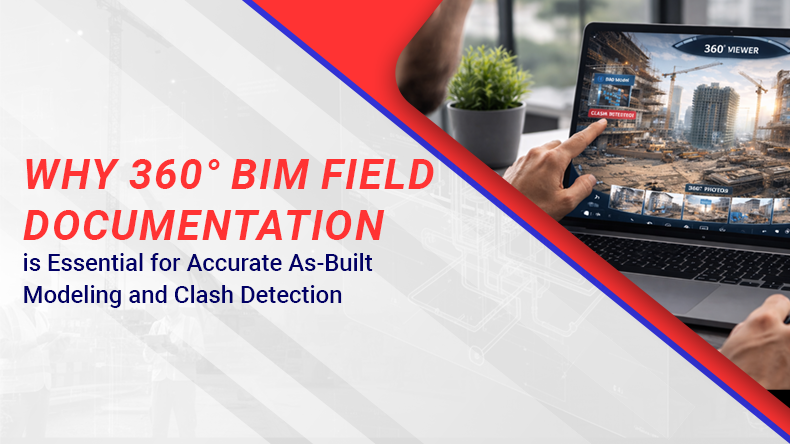
Clash detection becomes even more powerful when you pair it with reliable field data. And that’s where 360° BIM field documentation steps in.
Work Smarter, Not Harder
iFieldSmart empowers your team with AI-driven efficiency to simplify scheduling, boost collaboration, and keep projects on track.
Schedule a MeetingHow BIM improves project coordination
BIM simplifies your daily workflow by offering everyone a single source of truth. When all trades work in a shared environment, the information feels easier to track, and the coordination flow stays consistent.
BIM models help you visualize:
- MEP routing
- Structural penetrations
- Ceiling space availability
- Equipment clearance zones
You catch conflicts early and guide teams with clear visuals that make sense to everyone, from the superintendent to the project owner.
Key Benefits of Clash Detection for Contractors
Clash detection strengthens your project in several ways:
- It cuts rework. You don’t rip out ductwork just because the pipe was installed first.
- It improves confidence. Crews feel sure about what they’re installing.
- It protects your schedule. No one likes delays from unexpected field conflicts.
- It supports owners. They see a model that mirrors the real building.
And all of this becomes more accurate when you bring in high-quality field documentation.
What 360° Documentation Brings to the Field
Think of 360° documentation like having a time machine for your jobsite. You can walk through the building at any point in the schedule—even if you’re sitting miles away.
You capture everything at once:
- Wall framing
- MEP rough-ins
- Slab prep
- Temporary conditions
- Safety hazards
You don’t miss anything because the camera sees everything.
How 360° Cameras Improve Reporting
When you pull up 360° field captures, you instantly see the truth. Teams don’t have to rely on handwritten notes. You can examine the website with a degree of clarity that makes it seem as though you are actually there.
360° Documentation vs Traditional Field Notes
| Feature | 360° Documentation | Traditional Notes |
|---|---|---|
| Coverage | Full-room capture | Limited snapshots |
| Accuracy | High precision | Easy to misinterpret |
| Speed | Fast site walk | Slower manual notes |
| Sharing | Web-based, easy access | Files and folders |
| Model alignment | Strong | Weak |
The difference becomes obvious the moment you match your field captures to your BIM model.
The Value of Precise As-Built Modeling
With no assumptions or conjecture, As-Built modeling faithfully captures the structure as it is. When the owner wants facility data, or your team closes out the project, your As-Builts carry the truth.
With clean As-Builts, you:
- Avoid warranty disputes
- Confirm installation quality
- Support future renovations
- Deliver a professional turnover package
How As-Built Modeling Reduces Rework
As-Built modeling gives you clarity during critical phases. For example, if your electrician routed conduit slightly differently than planned, you update it in the model early. That small update prevents future clashes when the mechanical team moves into the same area.
Integrating As-Builts With Clash Detection Tools
When As-Builts and 360° documentation feed into your clash detection workflow, your BIM team doesn’t work off outdated information. The model reflects reality, so clash reports stay accurate.
What this really means is simple:
Your field data makes your coordination meetings smarter.
BIM + 360° Documentation: A Powerful Combination
Contractors across the USA rely on BIM and 360° documentation because together they create a real-time digital representation of the jobsite. The BIM model shows the plan. The 360° documentation shows the truth. Combine them, and your team performs in sync.
Real-World Use Cases on Construction Sites
- Verifying MEP installations before the ceiling close-up
- Checking slab penetrations before concrete placement
- Confirming rough-in locations for quality control
- Reviewing mechanical rooms remotely
- Documenting progress for owners
Impact on General Contractors and Trade Partners
LGCs gain visibility.
Trades gain peace of mind.
Owners gain confidence.
Everyone stays aligned because they see the same information.
The Best Ways to Put BIM Field Documentation into Practice
A few easy practices will help you make this workflow shine:
- Capture 360° photos weekly.
- Tag photos by room or level.
- Sync camera data with your BIM platform.
- Train teams to review field captures before each trade meeting.
- Store all data in a shared environment.
Tools and Technologies Used for Better Field Capture
You can use:
- 360° cameras
- BIM coordination software
- Model comparison tools
- Cloud-based documentation systems
Where BIM Engineering US Fits Into the Workflow
Teams often work with partners like BIM Engineering US to simplify BIM coordination and improve field documentation workflows without adding extra burden to project teams.
Conclusion
Clash detection becomes far more powerful when you support it with reliable 360° documentation and accurate As-Built modeling. Your project remains aligned, your trades remain confident, and your timeline is safeguarded when your BIM team uses actual field data.
Strong field documentation is the first step toward creating a jobsite that is more manageable, quicker to coordinate, and easier to close off.